✦ SATYABHAMA MAJHI ✦
Contemporary Indian Artist | Painter | Sculptor | Installation Artist | Photographer | Curator | Community Art Practitioner
Exploring Urban Transformation, Indigenous Knowledge, Ecology and Collective Memory Through Contemporary Art
“For me, art is not separated from everyday life. It grows from people, places, memory, nature and the changing relationships between them.”
Introduction
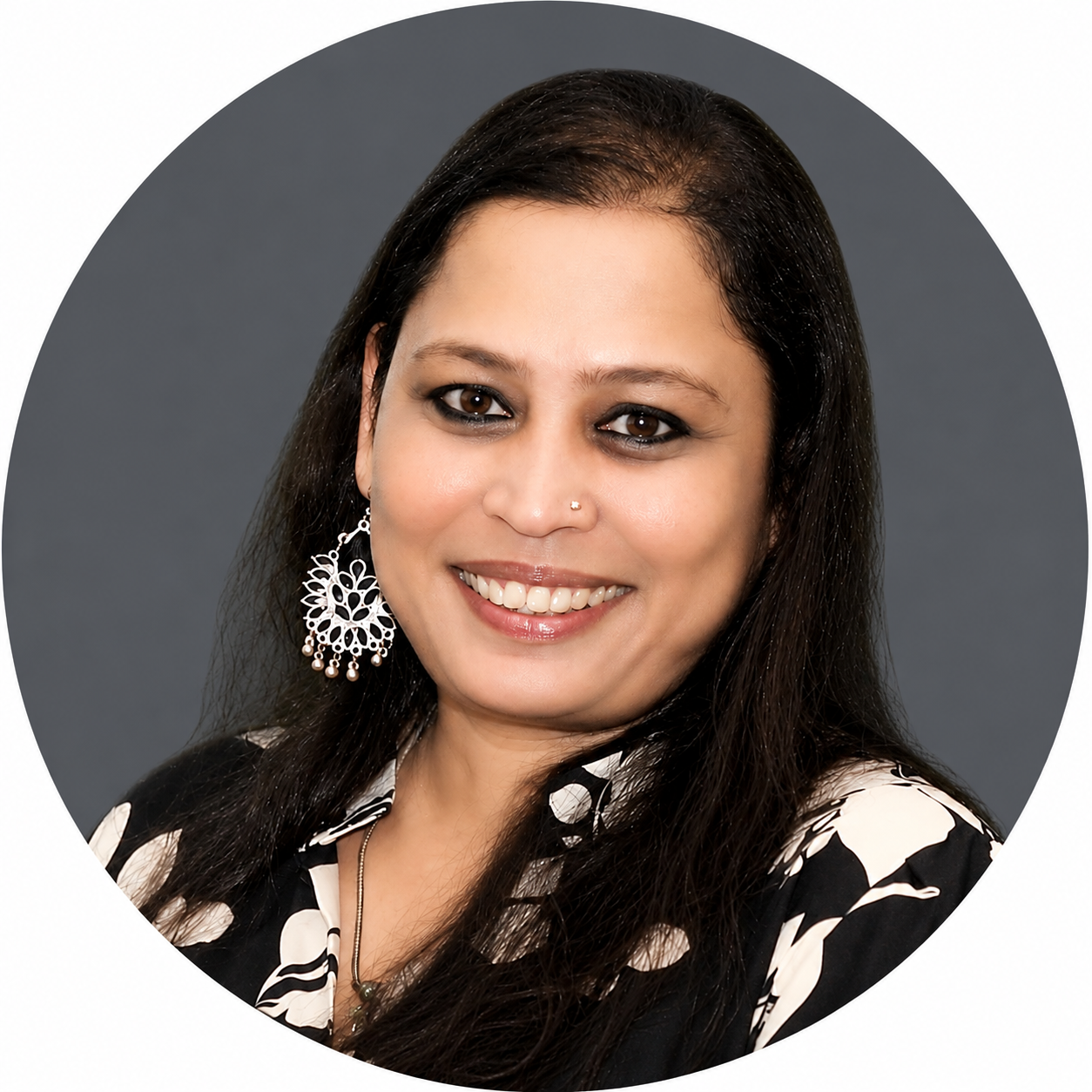
Satyabhama Majhi is a contemporary Indian visual artist, curator and community-art practitioner based in Bhubaneswar, Odisha.
Her artistic practice moves across painting, sculpture, installation art and photography, while painting remains one of her principal forms of expression. Her work engages deeply with questions surrounding urbanisation, cultural memory, indigenous traditions, ecological relationships and everyday community life. Her submitted CV describes her practice as multidisciplinary and notes her sustained engagement with socially relevant projects, schoolchildren and tribal communities.
Majhi holds an M.F.A. in Traditional Art and has developed a practice that brings together contemporary visual language with the cultural and ecological knowledge of Odisha.
Her career is distinguished not only by gallery exhibitions and public-art projects but also by long-term engagement with communities. She has worked with children, women artists, artisans and indigenous communities, seeking to make art a space for learning, dialogue, empathy and collective participation.
A particularly important dimension of her work has been her sustained engagement with the Dongria Kondh community of Odisha, whose relationship with the Niyamgiri landscape, natural materials and traditional visual vocabulary has significantly informed her artistic thinking.

- Name: Satyabhama Majhi
- Native Name: ସତ୍ୟଭାମା ମାଝି
- Gender: Female
- Country of Citizenship: India
- Place of Birth: Bhubaneswar, Odisha, India
- Native Language: Odia
- Languages Spoken/Written: Odia
- Occupation: Painter
- Professional Description: Contemporary Visual Artist of India
- Wikidata ID: Q113243902
- Union List of Artist Names (ULAN) ID: 500779503
- Associated Wikimedia Project Focus List: OpenSpeaks
Art Rooted in Place, Memory and Everyday Life
Satyabhama Majhi's understanding of art begins with observation.
Her portfolio describes the city not simply as architecture or infrastructure, but as a constantly changing accumulation of history, social behaviour, cultural negotiations, memory and everyday human activity.
Her own childhood experiences became central to this artistic language.
Majhi recalls growing up around her father's shop in a local Bhubaneswar market. The market exposed her from an early age to a continuous flow of people, animals, seasonal celebrations, commerce, consumption and changing urban behaviour. These observations gradually became an important source for her visual practice.
For her, the market became almost a living archive.
It preserved memories of an earlier Bhubaneswar while simultaneously witnessing the city's transformation through development and urban expansion.
Her portfolio reflects upon the tension between the older city and the emerging idea of the “Smart City,” describing Bhubaneswar as a place continuously negotiating with urbanisation and development.
This relationship between:
Past and Present
Memory and Development
Individual and Collective
Rural and Urban
has become one of the recurring foundations of her work.
Growing Urbanisation — A Central Artistic Concern
Urbanisation occupies a significant place in Majhi's artistic practice.
Rather than representing the city merely through buildings and roads, she focuses on the people who inhabit, negotiate and continuously reshape urban spaces.
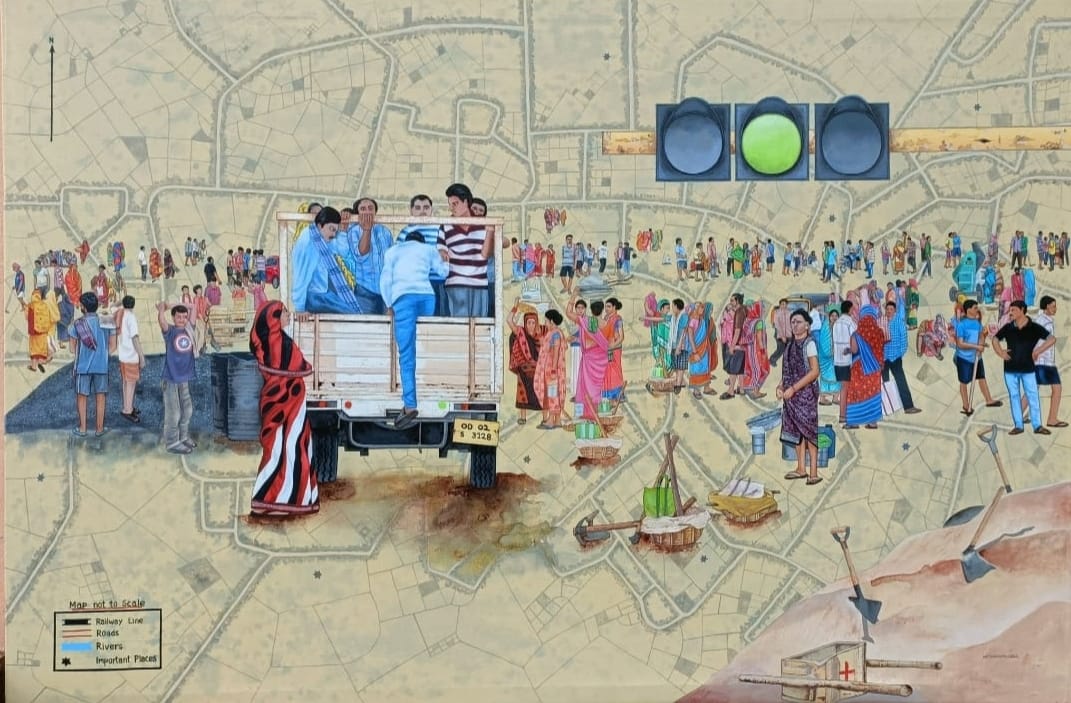
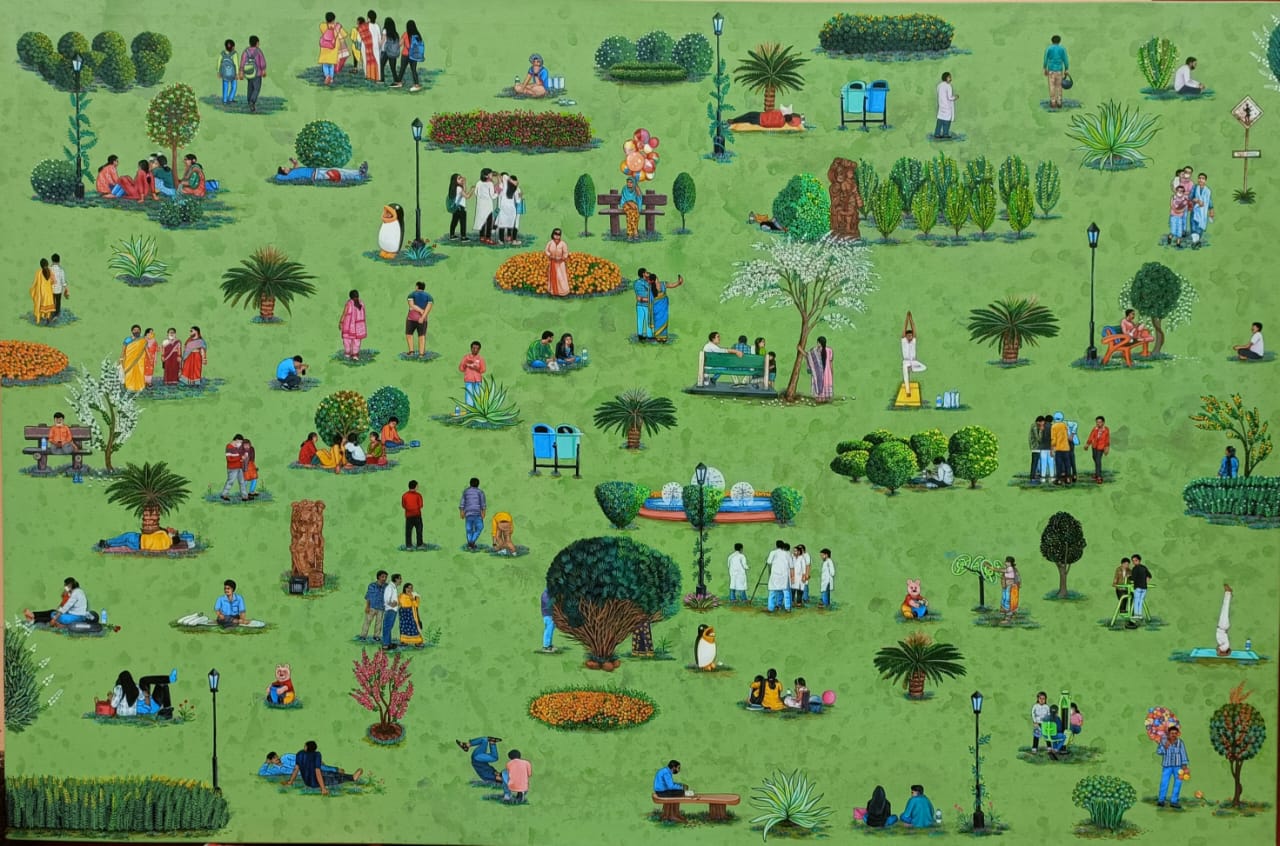
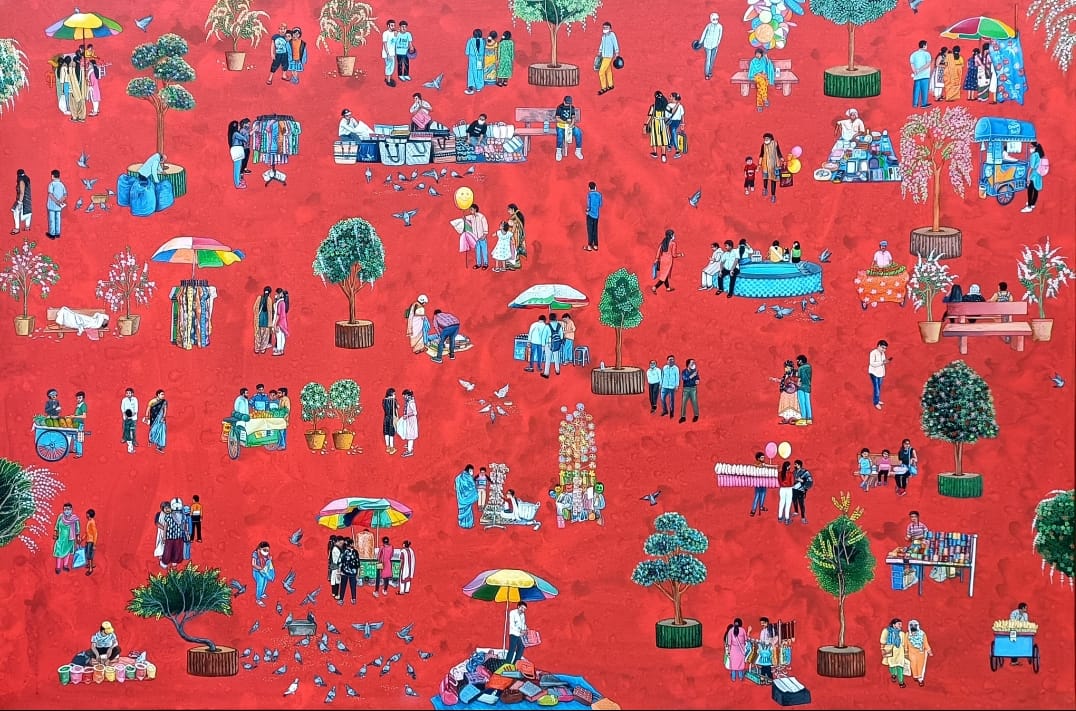
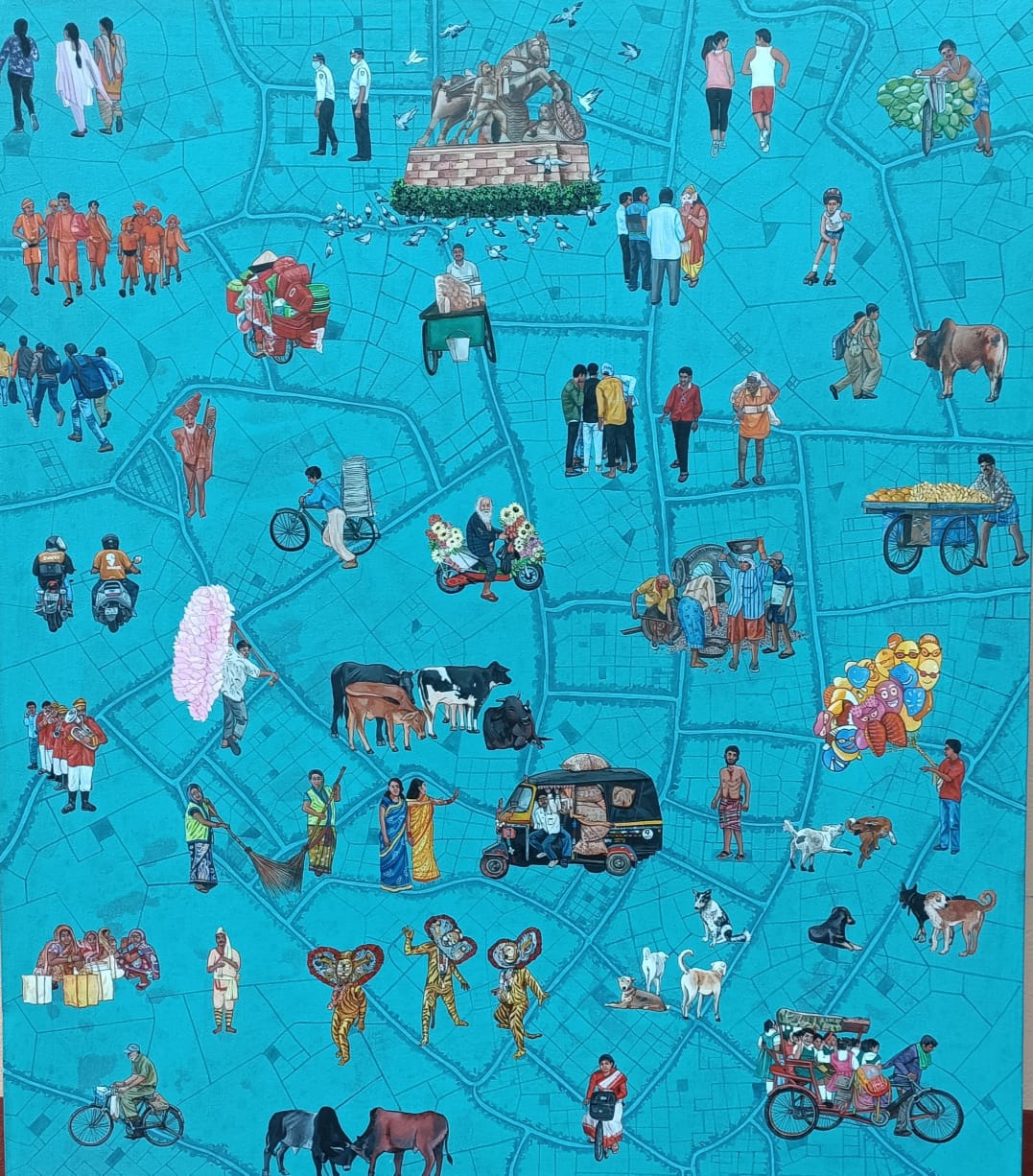
Her paintings often contain multiple miniature human activities occurring simultaneously.
People gather.
Vendors work.
Families move through public spaces.
Animals coexist with human settlements.
Plants, trees and architectural elements appear beside ordinary urban interactions.
The result is a visual world in which the city becomes a network of relationships rather than simply a physical location.
Her portfolio explicitly describes an interest in questioning urbanisation through displacement, popular culture, regional spaces and changing patterns of everyday life.
The City as a Living Landscape
Several works reproduced in her portfolio from 2022 demonstrate this approach.
One large Untitled acrylic painting presents numerous human figures distributed across an expansive green landscape, surrounded by trees, public furniture, pathways and everyday interactions.
Another Untitled work uses an intense red field populated by vendors, pedestrians, plants, public gathering spaces and small episodes of urban life.
A further 2022 work employs a blue field containing roads, people, bicycles, vehicles, animals and fragmented urban activities, suggesting the complex coexistence of movement, infrastructure and everyday life.
These compositions demonstrate a characteristic feature of Majhi's visual language:
The individual scene is small, but the collective experience is vast.
Her paintings often invite viewers to move slowly across the surface, discovering one interaction after another.
Engagement with the Dongria Kondh Community
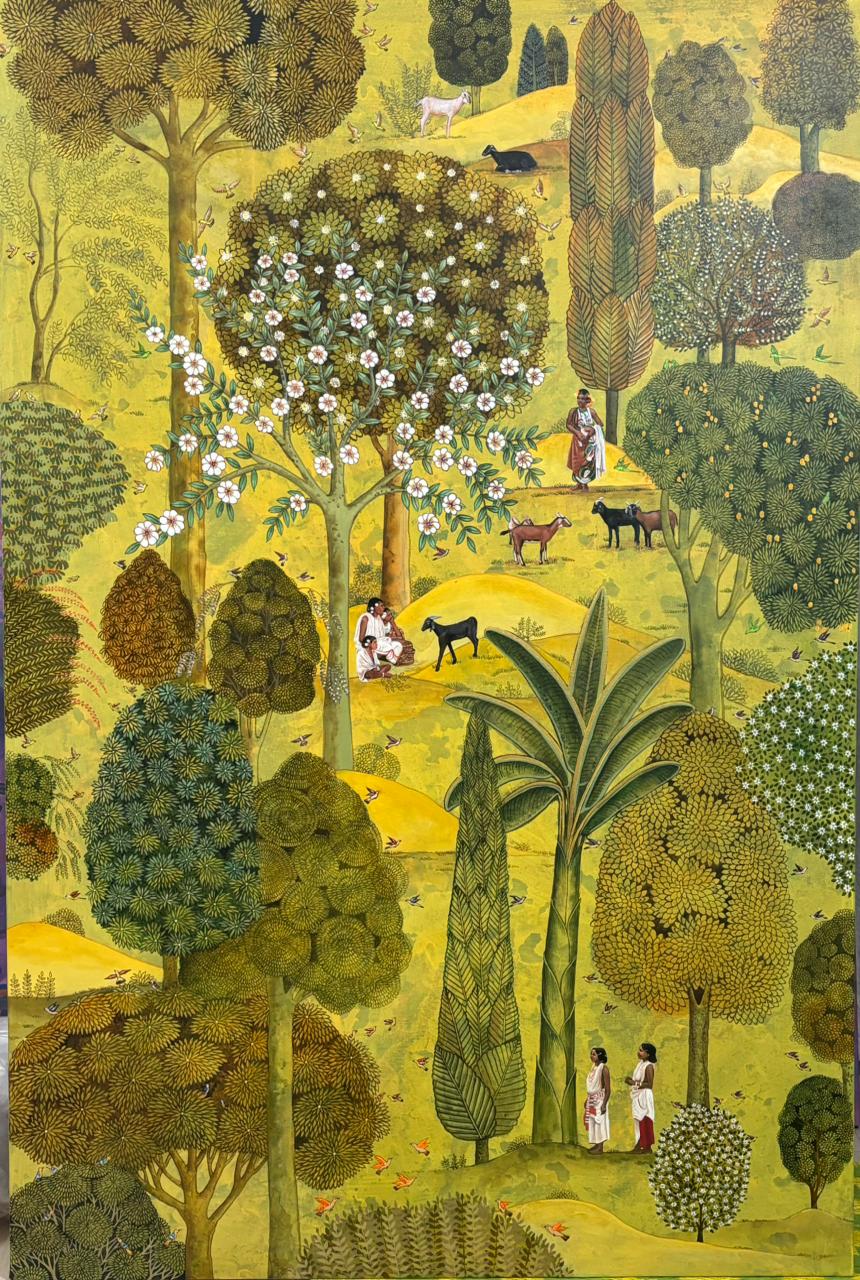
One of the most distinctive dimensions of Satyabhama Majhi's artistic journey has been her sustained engagement with the Dongria Kondh community of Odisha.
Her portfolio states that she has engaged with the community for more than ten years, seeking to understand its cultural practices, livelihood and relationship with nature.
For Majhi, this engagement is not simply ethnographic observation.
It has become a way of thinking about the contrast between urban life and indigenous ways of living.
She observes that urban communities and tribal communities may experience very different forms of struggle, yet both involve movement, survival, aspiration and adaptation.
Her work asks how these apparently different worlds may be understood beyond geographical boundaries.
Niyamgiri — Art, Ecology and Sacred Landscape
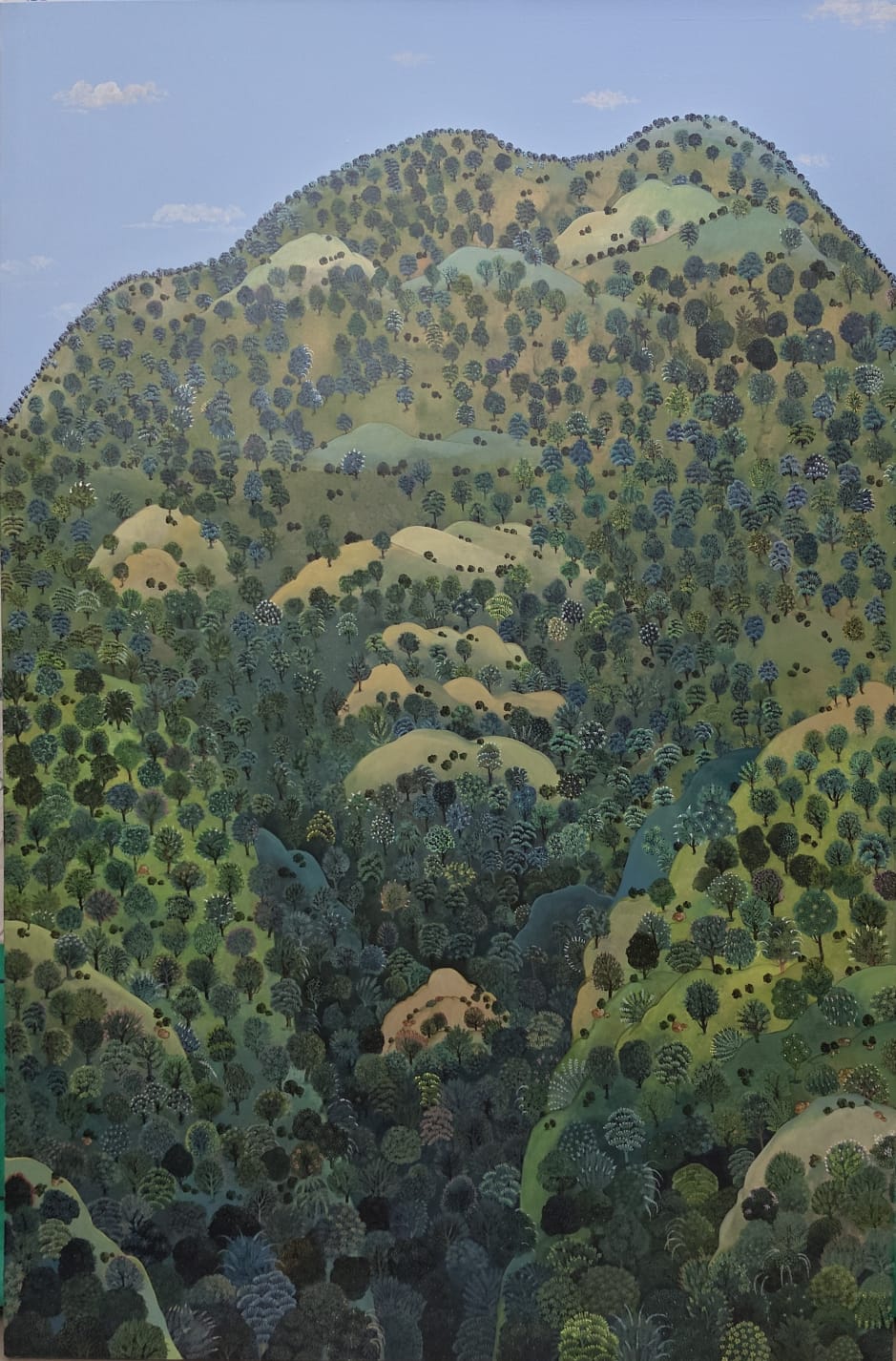
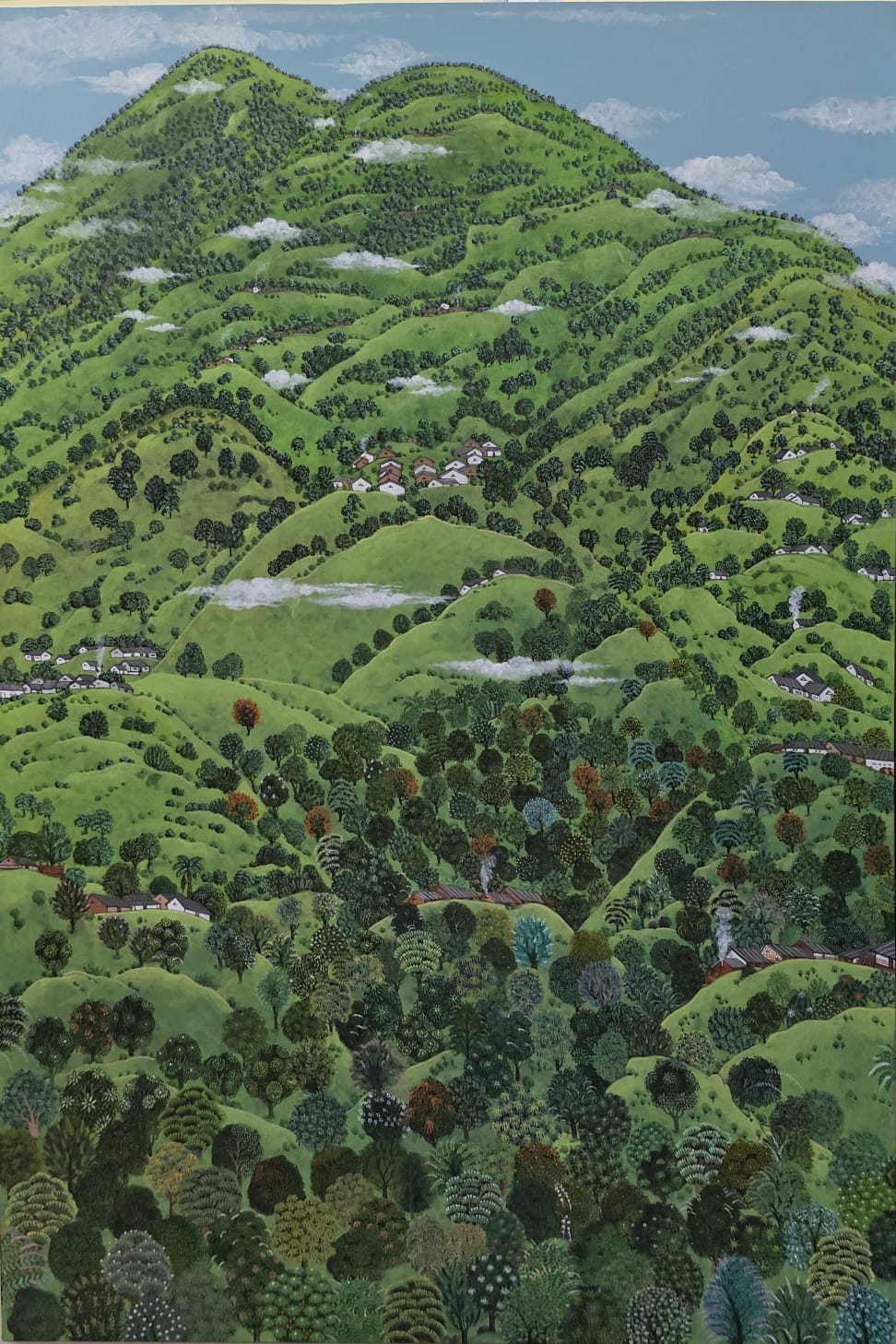
Majhi's artistic exploration of the Dongria Kondh community is closely connected with the Niyamgiri landscape.
Within Dongria Kondh cultural life, the hills are deeply connected with spirituality, livelihood and the community's relationship with Niyam Raja.
Majhi became particularly interested in the way artistic expression exists naturally within everyday tribal life.
Homes become surfaces for painting.
Patterns become cultural memory.
Natural materials become colour.
Geometric symbols become carriers of collective meaning.
This encounter allowed her to examine a form of creativity where art is not separated from daily existence.
Painting with the Earth
An important aspect of Majhi's exploration involved learning from traditional methods of obtaining colour from the surrounding landscape.
In the material supplied for her profile, five natural pigment sources from the Niyamgiri region are described:
Chalk Stone
Charcoal
Turmeric
Geru Soil
Brown Stone
These materials were powdered and combined with a binding medium to create colours connected directly with the land.
Through this process, the act of painting became more than image-making.
It became a physical relationship between:
Artist + Material + Landscape + Community
Such an approach connects contemporary art with ecological awareness and traditional systems of knowledge.
The Triangle — A Visual Language of Niyamgiri
The triangular form became particularly important in Majhi's work inspired by the Dongria Kondh community.
Within the cultural interpretation presented in her project material, the triangle evokes:
The Niyamgiri Hills
Stability
Sacred Geography
Divinity
Community Identity
Majhi repeatedly incorporated triangular forms into her compositions, translating elements of indigenous visual language into a contemporary artistic context.
Her 2021–22 mixed-media series reproduced throughout her portfolio demonstrates a sustained exploration of triangles alongside human figures, plants, everyday objects and culturally resonant imagery.
Some compositions appear as repeated geometric arrangements; others bring triangles into dialogue with people, architecture, landscape and organic forms.
The effect is not simply decorative.
The geometry becomes a bridge between cultural memory and contemporary visual experimentation.

“Up and Down” — Movement as Everyday Life
Majhi's portfolio also describes an idea she encountered while engaging with the Dongria Kondh community:
“Up and Down.”
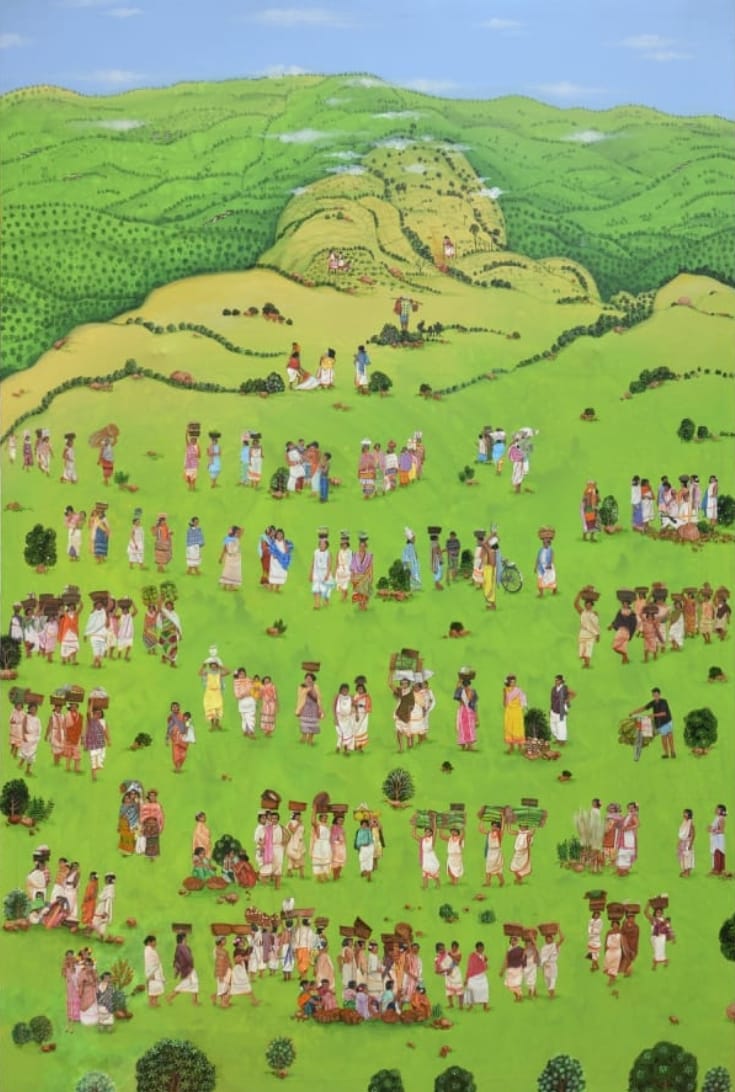
For people living in the hilly Niyamgiri landscape, movement upward and downward is part of everyday life.
Majhi recognised this seemingly simple movement as something deeply connected with livelihood, geography and human resilience.
Her portfolio explains how the recurring movement of the community inspired her to create work addressing daily life, nature and the contrast between tribal and urban struggles.
In this context, movement becomes both physical and philosophical.
People move across hills.
Cities expand.
Communities adapt.
Lives change.
Yet the search for continuity and a better future remains universal.
Art as a Bridge Between Communities
Majhi's work does not attempt to collapse differences between urban and indigenous communities.
Instead, it asks viewers to observe those differences more carefully.
She uses art as a means of exploring:
How communities inhabit space
How traditions survive
How landscapes influence identity
How development transforms everyday life
How human beings relate to nature
and
How empathy can emerge through observation
Her submitted CV describes her community engagement as part of an effort to develop better relationships with nature, oneself, other people and one's surroundings.
New Parliament House — “People's Wall: Jan, Janani and Janmabhumi”
A major milestone in Satyabhama Majhi's professional journey came through her involvement with:
“People's Wall – Jan, Janani and Janmabhumi”
for India's New Parliament House.
Her CV identifies her as a Co-Sutradhar of this participatory project involving women artists and artisans from different parts of India. The project was realised for the New Parliament House through the Lalit Kala Akademi, New Delhi.
The initiative brought together regional artistic practices and women practitioners from across the country.
Its significance lay not only in producing an artwork for an important national institution but also in creating a collaborative platform where multiple traditions, visual languages and regional identities could coexist.
Majhi's involvement reflects another important aspect of her practice:
The artist as facilitator and curator, not merely individual creator.
Community Participation as Artistic Practice
Majhi has repeatedly moved beyond conventional studio-based practice.
Her career includes participation in:
-
Public art
-
Community art
-
Children's workshops
-
Tribal-community engagement
-
Art camps
-
Residencies
-
Murals
-
Collaborative installations
-
Educational initiatives
-
Socially engaged art projects
This broader approach places community participation at the heart of her professional identity.
For Majhi, art can become a means through which people who may never enter galleries can participate in creative expression.
Working with Children and Creative Education
For approximately fifteen years, Majhi has worked extensively with schoolchildren and educational communities.
Her CV describes these initiatives as attempts to help children and school authorities engage with creative learning processes through art and art practices.
She has also worked with organisations including Gram Vikas and Tata Trust in connection with child education in Odisha.
Her educational work reflects the belief that artistic creativity should not be treated as something separate from learning.
Children can use visual art to interpret:
Home
Family
Nature
Daily Work
Community
Memory
Personal Experience
Through such exercises, ordinary life itself becomes educational material.
Kalpanadham and Creative Learning
Her work with children has also been associated with creative-learning initiatives such as Kalpanadham.
The approach encourages children, including those from tribal communities, to convert familiar elements of their lives into visual expression.
Instead of imposing an external definition of art, the process begins with what children already understand:
their surroundings,
their daily routines,
their families,
their environment,
and their imagination.
This approach seeks to develop creative confidence while preserving a strong connection with lived experience.
Public Art and Urban Beautification
Public art forms another substantial part of Majhi's professional practice.
Her CV records participation in numerous mural and public-art projects across Odisha.
In 2019, she participated in a wall mural project organised by the Government of Odisha around the World Men's Hockey Cup.
Her earlier public-art work included:
-
Public art projects at Gopalpur
-
Murals associated with major sporting events
-
OMFED wall painting
-
Bhubaneswar public-art interventions
-
Site-specific art workshops
-
Community mural initiatives
Her CV records a Bhubaneswar mural produced in connection with the Asian Athletic Games as well as the Pago Public Art Project at Gopalpur.
Through these projects, walls and public spaces become open-access cultural surfaces.
Art moves outside the gallery.
The city itself becomes the exhibition space.
Art and Social Transformation
Satyabhama Majhi's practice repeatedly brings art into spaces where social relationships are being negotiated.
She has worked with:
Schoolchildren
Tribal communities
Women artists
Artisans
Village communities
Urban neighbourhoods
Public institutions
Her CV also records early work involving art activities with slum children organised in association with the SC and ST Development Department, Government of Odisha.
This long engagement demonstrates that socially engaged art has not been an occasional extension of her practice.
It has been present throughout her artistic development.
Sasatwa Foundation
Majhi has also been associated with the Sasatwa Foundation, through which art and socially oriented collaborative projects have been undertaken.
Her CV documents Sasatwa Foundation's involvement in initiatives including the Gram Art Residency and the Vancouver Biennale “I HAVE A DREAM” project in Bhubaneswar.
Through such initiatives, she has participated in creating platforms where artists, communities and social organisations can engage in shared creative processes.
Major Exhibitions and Artistic Platforms
Over the years, Satyabhama Majhi has participated in numerous exhibitions, camps, workshops, residencies and public-art projects.
Her professional record includes presentations and activities associated with important cultural institutions and galleries across India.
Among them are:
Bharat Bhavan, Bhopal
Her CV records a solo show at Bharat Bhavan in 2014-related listings.
Nature Morte, Gurgaon
She participated in a group exhibition associated with Utsha Foundation and Nature Morte Gallery.
New Delhi
Her CV records participation in exhibitions and programmes connected with galleries and institutions in Delhi, including national art initiatives and Lalit Kala Akademi programmes.
Bhubaneswar
A substantial part of her artistic career has been connected with Bhubaneswar through exhibitions, murals, workshops, camps, residencies and community-art programmes.
National and International Artistic Engagement
Majhi's practice has also intersected with larger national and international collaborative art initiatives.
Her CV records participation in:
Vancouver Biennale – I HAVE A DREAM Project
Gram International Residency
Art and Ecology International Art Workshop
Odisha Biennale
National Artists Camps
National Women's Artist Camp
and numerous other collaborative programmes.
These experiences have allowed her work to move between local community engagement and larger contemporary-art platforms.
Lalit Kala Akademi and Artistic Recognition
The Lalit Kala Akademi has formed an important part of Majhi's artistic journey.
Her CV records:
-
A National Lalit Kala Akademi Scholarship for 2009–2010
-
Participation in Lalit Kala Akademi camps and programmes
-
A State Award associated with the Odisha Lalit Kala Akademi
-
Participation in the New Parliament House project through Lalit Kala Akademi, New Delhi
The submitted CV lists the State Award of Lalit Kala Akademi, Odisha under 2010.
The accompanying biographical information supplied for this profile mentions the award as 2012. The exact year should therefore be verified before final publication.
Scholarship and Recognition
Majhi's professional record includes a:
National Lalit Kala Akademi Scholarship — 2009–2010
as recorded in her CV.
Such recognition came during a formative stage of a career that would subsequently expand into public art, socially engaged practice, community education, residencies and curatorial work.
Women, Art and Collaborative Practice
Women have occupied an important position in several of Majhi's collaborative projects.
Her career includes participation in:
-
Women's artist camps
-
International Women's Day exhibitions
-
Projects with Dongria Kondh women
-
National women's art programmes
-
Collaborative initiatives with women artisans
Her New Parliament House involvement extended this interest to a national participatory platform bringing together women artists and artisans from different regions of India.
This aspect of her career demonstrates how art can become a means of making local and regional knowledge visible within larger institutional spaces.
A Practice Between Tradition and Contemporary Life
Satyabhama Majhi's work occupies an interesting position between traditional knowledge and contemporary artistic practice.
She does not simply reproduce traditional imagery.
Instead, she studies how traditional symbols, materials and cultural practices can enter dialogue with present-day questions.
Her paintings and mixed-media works therefore connect:
Tradition with Contemporary Art
Village with City
Nature with Urbanisation
Memory with Development
Individual Experience with Collective Identity
Her formal education in Traditional Art provides one foundation for this approach, while her community engagement gives it lived cultural depth.
The Artist as Observer
Majhi's practice is distinguished by careful observation of ordinary life.
She does not necessarily search for monumental events.
Instead, she notices:
a person sitting beneath a tree,
a vendor waiting beside a cart,
people moving through a market,
families gathering,
workers carrying objects,
animals sharing urban spaces,
or tribal communities moving across a mountain landscape.
Through painting, these ordinary moments acquire another form of permanence.
They become records of how people inhabit a particular place at a particular time.
The Artist as Listener
Her community work also suggests another dimension of artistic practice:
Listening
Working meaningfully with tribal communities or children requires the artist to resist imposing a ready-made interpretation.
The process requires time.
Observation.
Conversation.
Trust.
Majhi's long engagement with the Dongria Kondh community—described in her portfolio as extending over more than a decade—demonstrates this sustained approach.
The Artist as Facilitator
Her curatorial and educational projects demonstrate that artistic authorship does not always require one person to create everything.
Sometimes the artist creates a structure within which others can participate.
This is especially visible in community projects and in the People's Wall – Jan, Janani and Janmabhumi initiative.
In this sense, Majhi's practice extends beyond the conventional identity of painter or sculptor.
She also functions as a:
Facilitator
Curator
Community Collaborator
Creative Educator
An Artistic Philosophy of Empathy
A recurring word in Majhi's submitted profile is empathy.
Her work with communities is connected with the idea of developing more thoughtful relationships:
with nature,
with ourselves,
with other people,
and with our surroundings.
This idea may be one of the most useful ways of understanding her larger artistic practice.
Whether she is examining urban transformation or tribal life, her work asks viewers to look more carefully before reaching conclusions.
Ecology and Sustainable Knowledge
Majhi's engagement with natural pigments and indigenous visual traditions also places ecological questions within her practice.
The use of locally sourced materials demonstrates how art can emerge from sustainable relationships with landscape rather than dependence entirely on industrially manufactured materials.
Her work raises broader questions:
What happens when development disconnects people from land?
What forms of knowledge disappear when traditional practices disappear?
Can contemporary art help preserve awareness of these relationships?
Such questions give her work relevance beyond purely visual concerns.
A Contemporary Artist of Odisha
Although Majhi's practice is deeply rooted in Odisha, it is not geographically limited in its meaning.
Themes such as:
Urbanisation
Displacement
Environmental Change
Cultural Memory
Identity
Community
Tradition
are relevant throughout contemporary India and beyond.
Her particular strength lies in addressing these larger questions through specific experiences of Odisha.
The local becomes a way of speaking about the universal.
Continuing Artistic Journey
Satyabhama Majhi's artistic career continues to move between individual studio practice and collaborative social engagement.
Her portfolio demonstrates that she is equally interested in the intimate scale of small mixed-media works and the expansive social scale of murals, installations, residencies and public projects.
For her, contemporary art need not choose between:
Gallery and Village
Canvas and Wall
Individual and Community
Modernity and Tradition
Instead, these spaces can coexist.
Legacy and Artistic Contribution
Satyabhama Majhi represents a contemporary Indian artistic practice in which visual creativity is closely connected with social observation and cultural responsibility.
From the changing markets and neighbourhoods of Bhubaneswar to the hills of Niyamgiri, her artistic journey continually returns to questions of how people relate to the places they inhabit.
Her city paintings preserve fragments of rapidly changing urban life.
Her tribal engagement examines forms of knowledge rooted in nature and community.
Her public-art projects bring creativity into shared civic spaces.
Her educational initiatives encourage children to interpret their own lives through art.
Her curatorial work creates platforms for collaborative authorship.
And her engagement with women artists and artisans demonstrates how contemporary art can create visibility for diverse regional traditions.
Her professional journey therefore extends beyond the conventional definition of an artist.
She is simultaneously:
A Painter
A Visual Storyteller
A Community Collaborator
A Curator
An Art Educator
An Observer of Social Change
Her work ultimately suggests that art can do more than represent society.
It can help society see itself more carefully.
✦ PROFILE AT A GLANCE ✦
Full Name: Satyabhama Majhi
Date of Birth: 8 May 1981
Based In: Bhubaneswar, Odisha, India
Nationality: Indian
Profession
Contemporary Visual Artist
Painter
Sculptor
Installation Artist
Photographer
Curator
Community Art Practitioner
Education
M.F.A. in Traditional Art
as recorded in her submitted CV.
Major Areas of Artistic Practice
Painting
Installation Art
Sculpture
Photography
Public Art
Community Art
Curatorial Practice
Creative Education
Major Themes
Growing Urbanisation
Everyday Urban Life
Cultural Memory
Indigenous Knowledge
Dongria Kondh Culture
Niyamgiri Landscape
Ecology
Community Relationships
Displacement
Regional Identity
Women and Collaborative Art
Major National Project
People's Wall – Jan, Janani and Janmabhumi
Co-Sutradhar / Collaborative Curatorial Role
Project involving women artists and artisans from across India, realised for the New Parliament House through Lalit Kala Akademi, New Delhi.
Selected Recognition
National Lalit Kala Akademi Scholarship — 2009–2010
Odisha Lalit Kala Akademi State Award
The submitted CV lists the award under 2010; accompanying biographical material states 2012. The year should be verified before publication.
Selected Exhibitions, Projects and Platforms
Bharat Bhavan, Bhopal
Nature Morte, Gurgaon
Lalit Kala Akademi Programmes
Odisha Biennale
Vancouver Biennale – I HAVE A DREAM Project
Bhubaneswar Art Trail
National Artist Camps
Public Art Projects across Odisha
Gram Art Residency
Art and Ecology International Workshop
Her CV records a broad chronology of exhibitions, camps and public-art initiatives stretching from the early 2000s through the New Parliament House project in 2023.
Community Engagement
Schoolchildren and Creative Learning
Tribal Communities
Dongria Kondh Cultural Engagement
Women Artists and Artisans
Public-Art Participation
Gram Vikas
Tata Trust-associated educational initiatives
Her CV describes approximately fifteen years of engagement with schoolchildren and close work with tribal communities.
SATYABHAMA MAJHI
Contemporary Artist of India
Art • Community • Memory • Ecology • Urbanisation • Indigenous Knowledge
Her artistic journey brings together the changing city and the enduring landscape, contemporary visual language and traditional knowledge, individual experience and collective memory—creating an art practice rooted in both observation and empathy.